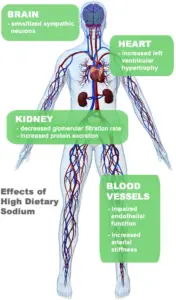
Consuming excessive salt (sodium) primarily disrupts the body’s fluid balance, forcing the cardiovascular system and renal network to work under heightened stress. Over time, high sodium intake creates systemic strain that targets several vital organs.
Key Health Consequences
| Affected System | Primary Impact | Long-Term Health Risks |
| Cardiovascular System | High sodium causes blood vessels to retain extra water, increasing total blood volume and vascular pressure. |
• Chronic Hypertension (High Blood Pressure) • Heart Attack & Heart Failure • Increased risk of Stroke |
| Renal System (Kidneys) | Excess pressure damages delicate filtering units (nephrons) while reducing the kidneys’ ability to filter fluid. |
• Chronic Kidney Disease (CKD) • Increased risk of Kidney Stones |
| Skeletal System | Excess sodium intake accelerates calcium excretion through urine. | • Osteoporosis & bone density loss |
| Gastrointestinal System | High sodium levels can irritate the mucosal lining of the stomach. |
• Increased risk of Stomach Cancer • Infection risk from H. pylori bacteria |
| Acute / Short-Term | Fluid buildup in extracellular tissues (edema). |
• Bloating, puffiness, and persistent thirst • Frequent headaches from elevated pressure |
Daily Recommended Limits
-
Ideal Limit (AHA): 1,500 mg of sodium per day (~0.75 tsp of salt) for optimal cardiovascular health.
-
Maximum Daily Cap: 2,300 mg of sodium per day (~1 tsp of salt).